What you can see on the Mustique cam
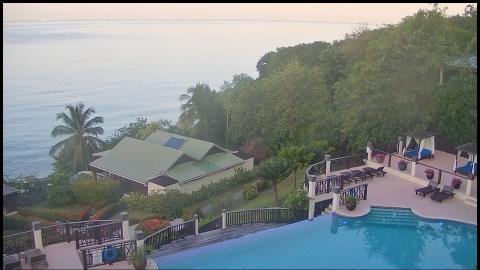
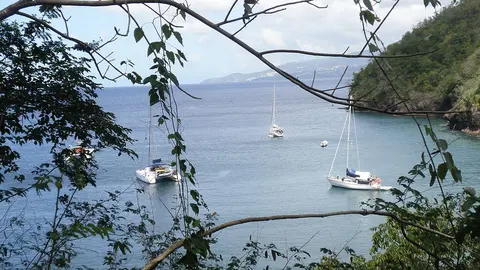
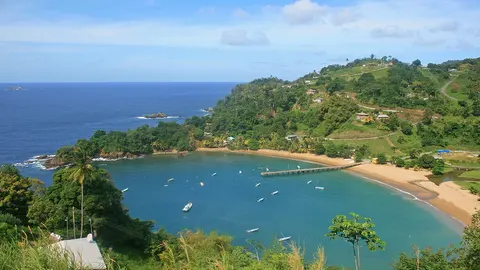
The camera looks from the hillside above Britannia Bay, over the trees, to the turquoise water of the bay, the jetty with the island's supply boats alongside, the yachts at anchor and the thatched roofs of the bar on the shore, with the wooded hills of the island behind. It is shown as a time-lapse of the last 24 hours.
The jetty and yachts of Britannia Bay
From the hillside above Britannia Bay, this camera looks over the treetops to the island's jetty, where the ferries and the supply ships tie up, the thatched roofs of the beach bar on the shore, a few yachts at anchor in the turquoise water and the green hills of Mustique curving round the bay. Windy replays the last 24 hours.
The bay is the island's front door: the replay shows the boats coming and going and the colour of the sea changing with the clouds.
A private island
Mustique's old cotton and sugar estates had long been abandoned when Colin Tennant bought the island in 1958; he gave a plot of land to Princess Margaret and turned the island into a hideaway for the rich and famous. It is still privately run: the Mustique Company looks after the roads, the airstrip and the island's few businesses, and visitors stay in one of its two small hotels or rent a villa.
When to watch Mustique
Saint Vincent and the Grenadines keep Atlantic Standard Time all year, four hours behind UTC. The busiest time is the winter season, from Christmas to Easter, when the yachts fill Britannia Bay; the hurricane season runs from June to November.
Nearby
Bequia, the largest of St Vincent's Grenadines, lies to the north, and Canouan and the Tobago Cays, a group of uninhabited islets ringed by a reef, to the south. St Vincent, with its volcano, La Soufrière, is about 30 km (18 miles) north.
Getting there
Small planes fly to the island's airstrip from Barbados and St Vincent, and boats run from St Vincent and Bequia. On the island, visitors get around in open buggies called mules.