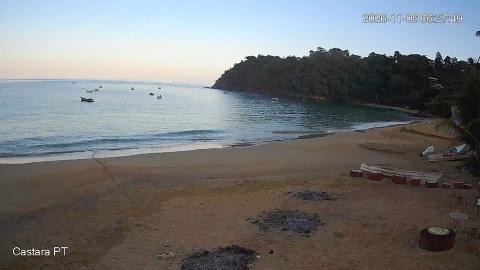
What you can see on the Castara cam
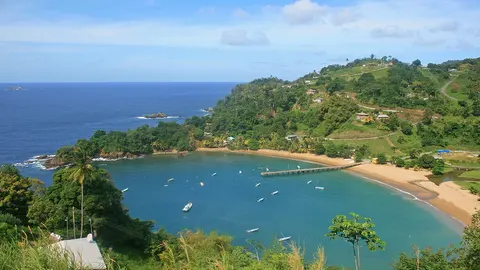
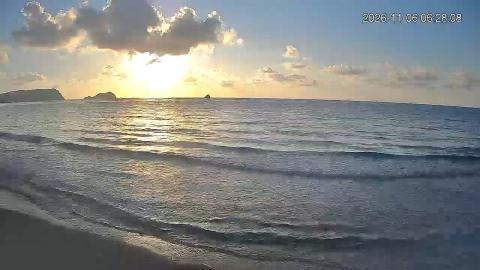
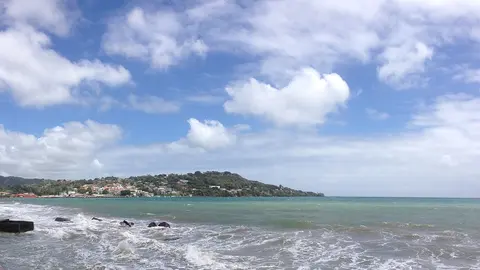
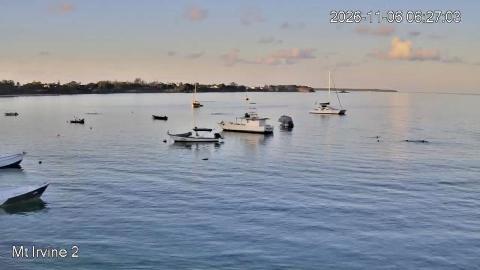
The camera looks along the beach of Castara Bay: the sand, the line of the waves, the boats moored in the bay and the steep, wooded headland that closes it, with the open Caribbean beyond. On calm mornings the water is glassy; when a swell comes in from the north, the surf breaks along the whole beach.
The beach of Castara Bay
From the edge of the beach, under the palms, this camera looks along the sand of Castara Bay to the steep, wooded headland at its end, with the fishing boats moored in the bay and the open sea beyond. It turns a little from time to time, so the framing of the bay changes.
It is the view the village wakes up to: the boats going out in the morning, the waves on the sand and, some days, the seine being pulled in from the beach.
A village that fishes together
Castara has kept the old way of fishing with a seine: a long net is set from a boat around a shoal of fish close to the beach, and then villagers, and often visitors, pull it in by hand from the sand. When the catch comes in, it is shared out and sold on the spot. The bay has two beaches, the main one in front of the village and a smaller, quieter one round the rocks, and a short walk inland leads to a little waterfall in the forest.
When to watch Castara
Tobago keeps Atlantic Standard Time all year, four hours behind UTC. Mornings are the liveliest time on the beach, when the boats go out and the seine may be pulled. The dry season, from January to May, brings the clearest skies; the big swells of the northern winter can make the sea rough.
Around Castara
The coast road runs west to Englishman's Bay, an undeveloped beach backed by forest, and east to the fishing bay of Parlatuvier. Inland, trails cross the Main Ridge Forest Reserve, a refuge for the island's birds.
Getting to Castara
The village is on the north-coast road, about an hour's drive from the airport at Crown Point, over the hills by Plymouth or Moriah. Taxis and buses run from Scarborough, and the road is narrow and winding in places.