
What you can see on the Isla Mujeres cam
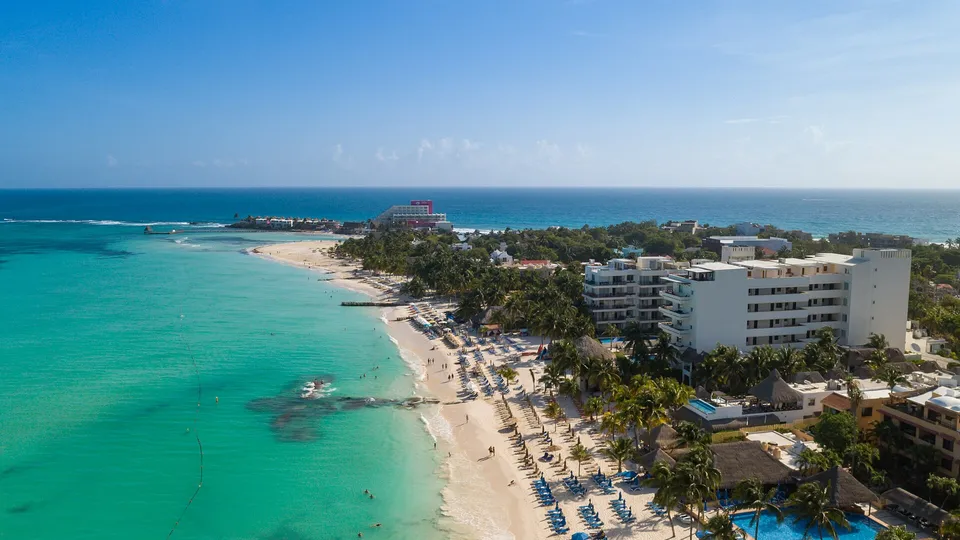
The view looks over Playa Norte: the white sand, the boats moored offshore and the turquoise shallows stretching out toward the deeper blue of the bay. It shows at a glance whether the water is flat or choppy and how busy the beach is.
A narrow island with a long history
Isla Mujeres is about 7 km (4 miles) long and only around 650 meters (2,100 feet) at its widest, and lies some 13 km (8 miles) off the coast. Its name, the Island of Women, comes from the Spanish sailors of the early 1500s, who found figures of goddesses here, most likely of Ixchel, the Maya goddess of the moon and fertility. The southeastern tip of the island, Punta Sur, is the easternmost point of Mexico.
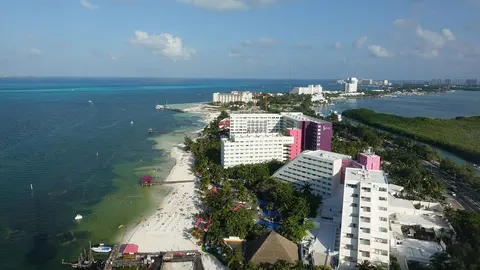
Playa Norte faces north and west, away from the Caribbean swell that pounds the island's eastern shore, and its sea floor stays shallow for a long way out. The island's western coast belongs to the same national marine park as Punta Cancún and Punta Nizuc, and MUSA, the underwater museum, has sculptures in these waters.
When to watch Isla Mujeres
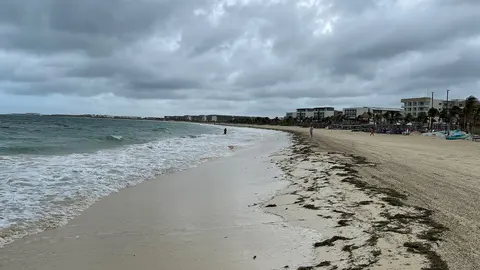
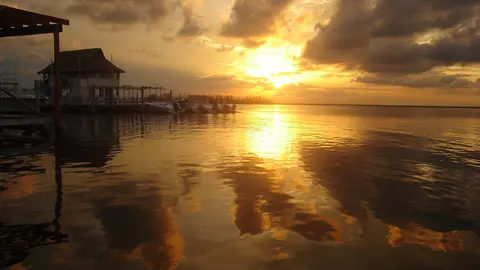
Playa Norte looks west, so the sun sets over the sea in front of it: the last hour of daylight is the time to watch. Around midday, with the sun overhead, the shallows over the white sand reach their palest turquoise. From mid-May to mid-September whale sharks gather in the open sea to the north. Sargassum tends to land on the island's eastern shore rather than here, though Playa Norte does not always escape it.
Nearby
The town begins just behind Playa Norte, a few minutes' walk from the ferry pier. A road runs south to the cliffs of Punta Sur. Across the bay, on the mainland, lie the resorts of Costa Mujeres.
Getting there
Passenger ferries cross from Puerto Juárez and Gran Puerto, just north of downtown Cancun, and from piers in the hotel zone; a car ferry leaves from Punta Sam. Golf carts, scooters and bicycles are the usual way around the island. Playa Norte is public and its water is usually calm, but stay inside the buoys, away from the boats. On snorkel trips, use reef-safe sunscreen and never touch the coral.