What you can see on the Utila cams
All the cameras are under the water, a few metres down on the reef in front of a dive resort. At the top of the wall, huge purple and yellow sea fans sway with the swell while small fish dart between them; on the edge, the reef slopes away into the deep blue, covered with soft corals. Closer to shore, the cameras by the dock look over white sand, coral heads and a channel of pale sand where the light filters down from the surface.
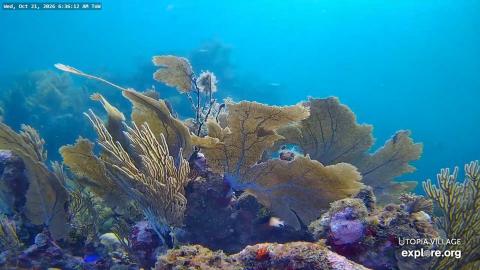
Sea fans on Utila's reef wall
A few metres down at the top of the reef wall, this underwater camera looks into a garden of huge purple and yellow sea fans and sea rods, swaying with the swell, while small yellow fish and wrasse dart between them in the clear blue water.
It is the most colourful of the Utila cams; it is best around midday on sunny days, when the light reaches down to the reef.
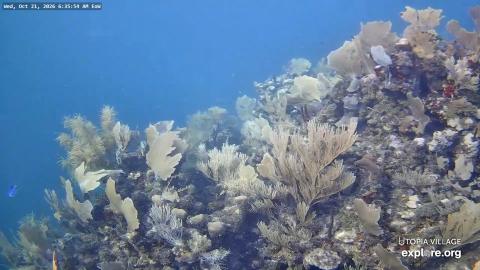
Soft corals on the edge of Utila's wall
On the edge where the reef of Utila starts to drop away, this underwater camera looks up along a slope covered with soft corals, sea plumes and sponges towards the open blue water, where fish pass in and out of view.
It gives the feeling of a dive along the wall, with the clear water of the open sea behind the coral.
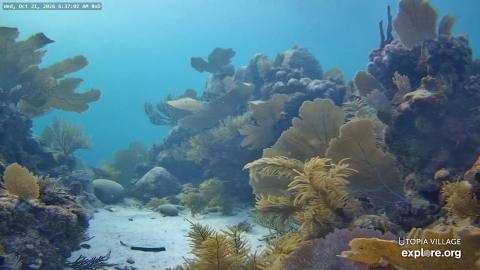
Sand and coral heads in Utila
In the shallows behind the dock of the dive resort, this underwater camera looks over a patch of white sand between big coral heads and golden sea fans, where small fish and the odd larger visitor move between the corals.
The bright sand makes it one of the clearest views when the sun is out.
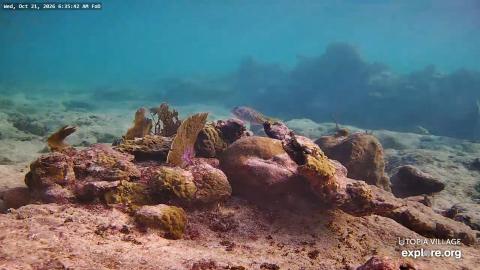
Brain corals in the Utila shallows
Low over the sandy bottom in front of the dock, this underwater camera looks at a ridge of brain, boulder and finger corals topped with small sea fans, with more coral and sand fading into the green-blue water behind.
Being shallow and close to shore, it shows the effect of the weather on the water: clear on calm days, cloudier after wind or rain.
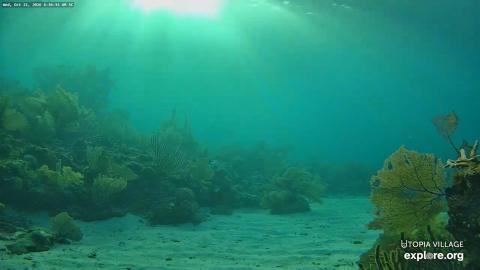
Sunlight over a sand channel in Utila
Along a channel of pale sand that runs between banks of coral and sea fans, this underwater camera looks into green-blue water lit by the rays of sunlight filtering down from the surface.
It is the calmest of the Utila views, a good one to leave open in the background.
Diving and whale sharks
Utila is one of the most popular places in the world to learn to dive, with dozens of dive shops in its village and reefs, walls and wrecks a short boat ride away. The deep water off its north coast is one of the few places in the Caribbean where whale sharks can be seen in some seasons, feeding on plankton at the surface. Most of the island is low, covered with mangroves and dry forest, and home to a spiny-tailed iguana found nowhere else.
When to watch Utila
The island runs on Central time with no daylight saving, so it is always six hours behind UTC and an hour behind Cancun. The cameras under the water show most on sunny days around midday, when the light reaches deepest; the rainy season, from about October to January, can cloud the water.
Nearby
Roatán, the largest of the Bay Islands, is a short flight or a boat trip away, with its own reefs and resorts. The Utila Cays, a group of tiny islands off the south-west coast, have small fishing communities living on stilt houses over the water.
Getting there
Ferries from La Ceiba, on the Honduran mainland, take about an hour; small planes also fly from La Ceiba and Roatán. Divers check the conditions with their dive shop: the reef is protected, and visitors never touch the coral.